Trades

Staircase & Railing Contractors
Chicago

New staircases, railing replacement, wood, metal, cable, and glass railing systems, tread refinishing, and historic stair restoration for Chicago homes and commercial spaces.

  • Stairs and railings built by our own finish carpenters
  • Rise, run, and baluster spacing checked against code
  • Wood, metal, cable, and glass railing systems
  • Free site visit and a written, line-item bid
  • Chicago-based, in-house crews
  • Licensed, bonded & insured in IL
  • 1-year written workmanship warranty

Get your free estimate

Stairs & Railings · Same-day response. No obligation.

Phone or email (one is enough)

Rather talk? Call or text (773) 457-2007

What We Do

Staircase & Railing Contractors
in Chicago

Stairs and railings are among the highest-visibility elements in a home — and among the most technically demanding to build correctly. Code compliance, structural attachment, baluster spacing, and the precision of the finish all matter. Our stair and railing work is handled by our finish carpentry crew with experience on both new construction and renovation projects.

As staircase and railing installers, we install complete stair packages for new construction and additions, replace or upgrade existing railings in Chicago homes, and install modern railing systems including metal balusters, cable railing, and glass panel systems. We also refinish and replace stair treads as part of flooring and renovation scopes.

For historic Chicago greystones and two-flats with original stair details, we restore and repair existing millwork to preserve the character of the home. For contemporary renovations, we design and install clean modern stair systems that meet current code.

Scope of Work

What Makes Stairs Built Right

A staircase gets used thousands of times a year. Here’s what we build into every flight and every rail.

Code From the Start

Rise, run, headroom, and handrail height confirmed against code before anything is cut.

Even Rise & Run

Every step the same height and depth, so nobody trips on the one that’s different.

Solid Stringers

Stringers cut and attached to the structure properly, then inspected before finish work begins.

Structure Before Decoration

Headers, framing, and attachment completed first, because a stair has to be right underneath.

Quiet, Tight Treads

Treads and risers glued and fastened tight to the stringers, so the stairs don’t squeak.

Newels That Don’t Move

Newel posts anchored into the framing, so the railing feels solid when someone leans on it.

Baluster Spacing to Code

Balusters, cable, or panels spaced so the openings meet code and are safe for kids.

Handrails at the Right Height

Graspable handrails at code height, continuous along the flight and returned at the ends.

Skirt Boards & Trim

Skirt boards, returns, and trim fitted to treads and risers that are rarely uniform in older homes.

Historic Profiles Matched

Original balusters, newels, and handrail profiles matched or custom milled in older homes.

Stain, Paint, or Clear

Treads, rails, and balusters finished to match the floors and trim, with a durable topcoat.

Every Connection Tested

We walk every step and test every railing connection before sign-off. Nothing wobbles.

Railing Style

Traditional vs Modern Railings

The railing sets the look of the whole staircase. Both styles have to meet the same code; they get there with different materials.

Wood balusters & newels

Traditional

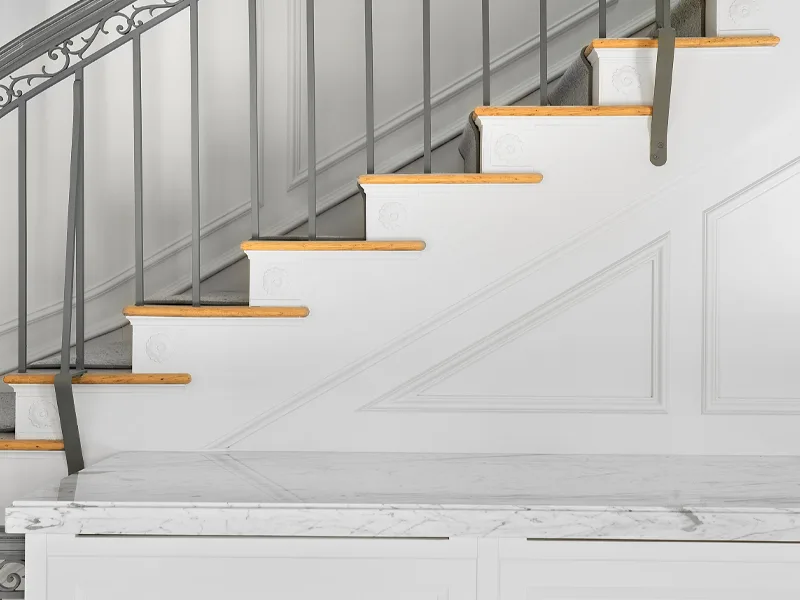
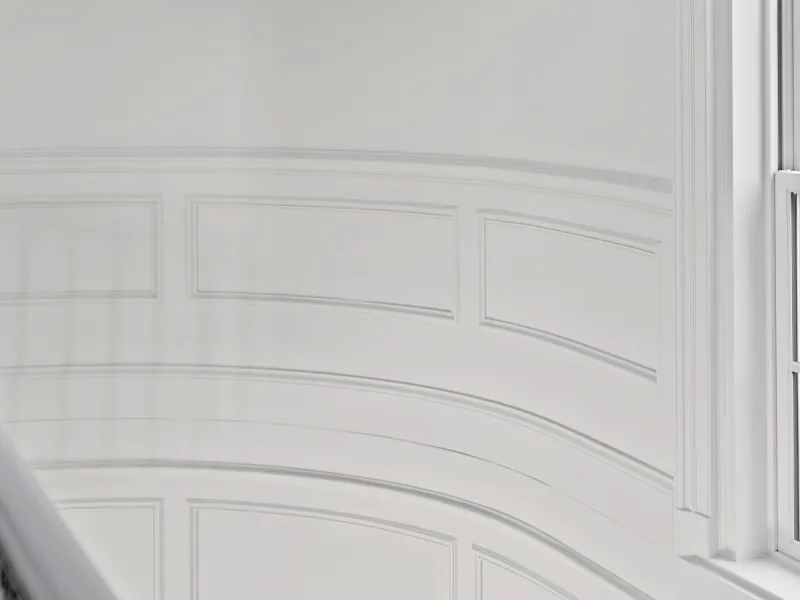
Traditional railings use wood balusters, turned or box newel posts, and a shaped wood handrail, painted or stained to match the trim and floors. They suit greystones, two-flats, and classic homes.

In older Chicago homes, traditional railings often mean restoring what is there: repairing loose balusters, re-anchoring newels, and matching original profiles from specialty suppliers or custom milling.

Best for

  • Greystones and two-flats
  • Turned and square balusters
  • Box and turned newel posts
  • Painted or stained finishes
  • Historic restoration
  • Matching original profiles
Metal, cable, glass & slats

Modern

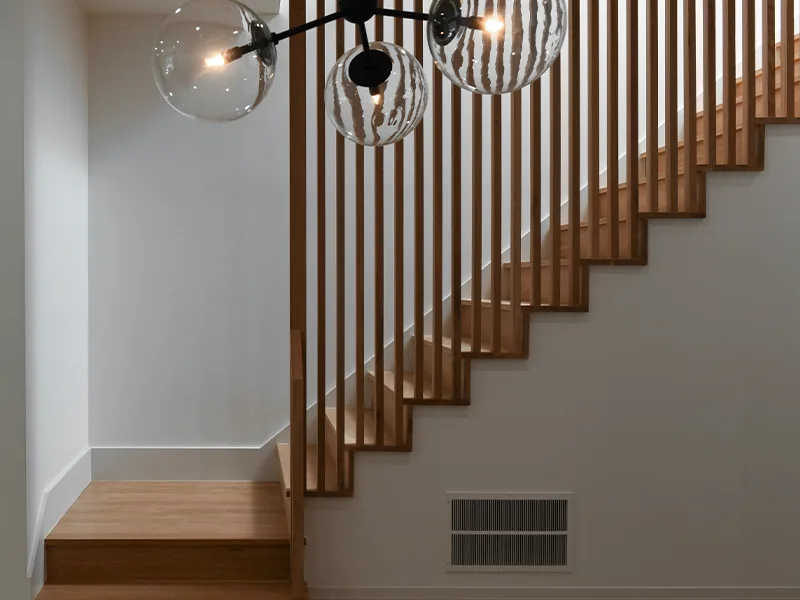
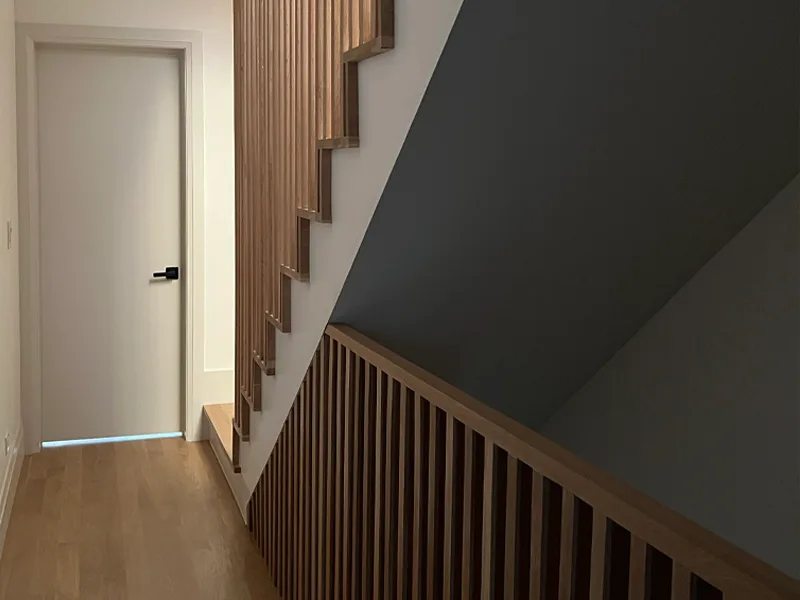
Modern railings use metal balusters, horizontal or vertical cable, glass panels, or full-height wood slats to keep the staircase open and light. They suit new construction and contemporary renovations.

These systems have their own structural and code requirements — cable tension, glass mounting, and post spacing — so they are planned with the stair framing, not added at the end.

Best for

  • New construction
  • Metal balusters and posts
  • Cable railing
  • Glass panel railing
  • Full-height slatted wood
  • Open-riser stairs

Updating the look without rebuilding the stairs? A new railing system can often go on the existing staircase in a few days.

Get a stair bid
Stairs

Kinds of Stairs We Build

From a basement flight to an open-riser feature stair, framed and finished by our own crews.

  • Traditional

    Closed-Riser Stairs

    Treads with solid risers between them, the classic staircase in most Chicago homes.

    Where we use it

    • Main stairs
    • Two-flats
    • Basements
  • Modern

    Open-Riser Stairs

    Treads with no risers, so light passes through and the stair feels lighter in the room.

    Where we use it

    • New construction
    • Lofts
    • Modern renovations
  • Feature

    Floating Stairs

    Treads that appear to float, supported by a hidden or single stringer, often with glass or cable rail.

    Where we use it

    • Feature stairs
    • Open plans
    • High-end homes
  • Single run

    Straight Flights

    One straight run from floor to floor, the simplest layout to build and to code.

    Where we use it

    • Main stairs
    • Basements
    • Additions
  • One turn

    L-Shaped & Landings

    Stairs that turn 90° at a landing, fitting tighter floor plans and breaking up long runs.

    Where we use it

    • Single-family
    • Additions
    • Townhomes
  • Two turns

    U-Shaped & Switchback

    Two parallel flights joined by a landing, common in townhomes and tall, narrow homes.

    Where we use it

    • Townhomes
    • Multi-story
    • Narrow lots
  • Turning treads

    Winder Stairs

    Pie-shaped treads that turn the stair without a full landing, built carefully to stay safe and to code.

    Where we use it

    • Older homes
    • Tight spaces
    • Attic stairs
  • Utility · finished

    Basement Stairs

    Basement stairs rebuilt or finished to match the main floor, with code-height rails and good headroom.

    Where we use it

    • Basement finishing
    • Rebuilds
    • Code upgrades
  • Outdoor

    Exterior Stairs & Porches

    Exterior stairs with treated lumber, proper flashing, and frost-depth footings.

    Where we use it

    • Back porches
    • Decks
    • Entries
Railings

Railing & Baluster Systems

Every railing system has different structural and code requirements. We install all of them.

  • Classic

    Wood Balusters

    Turned or square wood balusters set into treads and handrail, painted or stained.

    Where we use it

    • Traditional homes
    • Greystones
    • Restorations
  • Iron · steel

    Metal Balusters

    Square and round metal balusters in various finishes, paired with a wood handrail and newels.

    Where we use it

    • Transitional homes
    • Renovations
    • Rail updates
  • Cable

    Cable Railing

    Horizontal or vertical stainless cable tensioned between metal or wood posts for an open look.

    Where we use it

    • Modern stairs
    • Lofts
    • Decks
  • Glass

    Glass Panel Railing

    Tempered glass panels in metal posts or channels, for the most open view through the stair.

    Where we use it

    • Feature stairs
    • Open plans
    • Landings
  • Slatted

    Full-Height Wood Slats

    Vertical wood slats running floor to ceiling, as in our West Town new construction.

    Where we use it

    • Modern homes
    • Stair walls
    • New construction
  • Posts

    Newel Posts

    Box and turned newels anchored into the framing at the bottom, landings, and turns of the rail.

    Where we use it

    • Every railing
    • Landings
    • Turns
  • Handrail

    Handrails & Wall Rails

    Graspable handrails on balustrades and walls, continuous along the flight and returned at the ends.

    Where we use it

    • Main stairs
    • Basements
    • Accessible routes
  • Restoration

    Historic Restoration

    Original balusters, newels, and rails repaired, re-anchored, and matched in vintage Chicago homes.

    Where we use it

    • Greystones
    • Two-flats
    • Victorian homes
  • Safety

    Code Upgrades

    Existing rails brought up to code with new heights, spacing, and attachment where they fall short.

    Where we use it

    • Older homes
    • Rentals
    • Home sales

Have original stairs worth saving? Solid treads can often be refinished instead of replaced, and original details restored.

Get a stair bid
Procurement

Materials Handled for You

A staircase comes together from dozens of matched pieces: stringers, treads, risers, balusters, newels, handrail, and fittings. Metal, cable, and glass systems are often made to order.

We take care of the material side for you, from the takeoff to custom fabrication, so you aren’t matching profiles or waiting on a railing system after the stairs are framed.

Send us your stair plans
  1. Takeoffs to Code Spacing

    Treads, risers, balusters, and fittings counted from the stair layout and code spacing.

  2. Priced in the Bid

    Stair parts and railing systems show up as their own lines in the written bid.

  3. Custom Systems Ordered Early

    Metal, cable, and glass railings and custom-milled profiles ordered as soon as the design is final.

  4. Matched Species & Finish

    Treads and rails in the species and finish that match the floors and trim around them.

  5. Deliveries Around Your Site

    Long rails and stair parts delivered on the building’s schedule, or the access of a city lot.

  6. Staged & Protected

    Stair parts acclimated and staged, finished treads protected, and packaging cleared as we go.

Pricing

What Does It Cost
in Chicago?

Transparent ranges based on recent Chicago projects. Your exact cost depends on scope, materials, and conditions.

Railing Replacement
$3,000 – $10,000

Replace existing railing system on an existing staircase — new balusters, newel posts, and handrail. Wood, metal, or cable systems. Typically 2–4 days.

Stair & Railing Package
$10,000 – $30,000

Full stair installation for a renovation or addition — stringers, treads, risers, and complete railing system. Single flight in most Chicago homes.

Most common scope
Multi-Flight / Custom
$30,000+

Multi-flight stair systems, open-riser floating stairs, cable or glass railing throughout, or historic restoration with custom-milled profiles.

Free Estimate: Every project starts with a free on-site consultation and written estimate. No obligation, no pressure. We'll tell you exactly what your project costs before you commit.

How It Works

Our Process

01/ 06

Measure & Code Review

Same-day reply

We measure the opening and confirm code requirements — rise, run, headroom, baluster spacing, and handrail height.

Our Work

Stairs From Our Projects

Stairs, railings, and stair trim from our Chicago projects, from a ground-up West Town home to historic and new homes in Lincoln Park and Andersonville.

Common Questions

Frequently
Asked Questions

Most clients have the same questions before starting. Here are straightforward answers — no hedging.

Still have questions? Let's talk

Yes. In a new single-family home in West Town we built the oak stair with full-height slotted white oak balusters and a slatted oak stair guard, as part of the ground-up build.

Get a Bid

Ready to Start Your Stair & Railing?

Tell us a little about the project. We’ll set up a free walkthrough and send a written, line-item bid.

Or call/text (773) 457-2007
  • Licensed, bonded & insured in IL
  • 1-year written workmanship warranty

Get your free estimate

Stairs & Railings · Same-day response. No obligation.

Phone or email (one is enough)

Rather talk? Call or text (773) 457-2007