


Definition
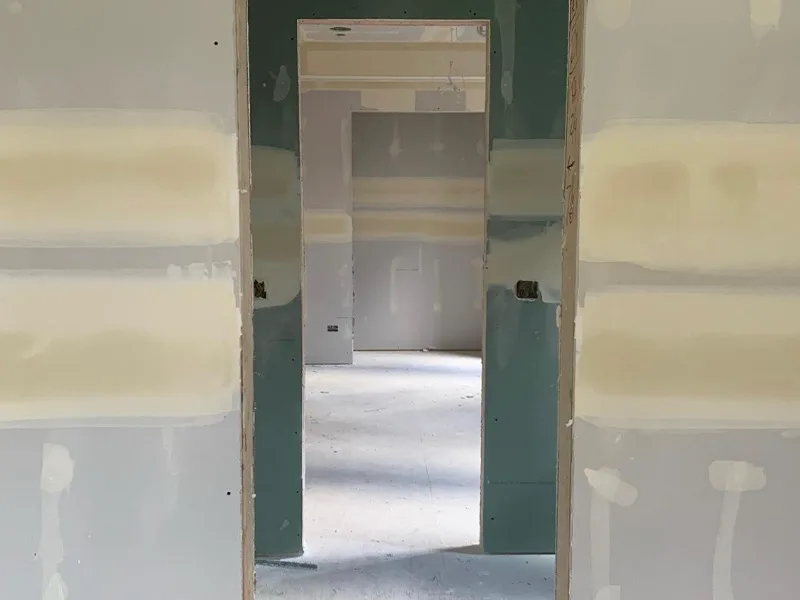
Drywall finish levels are an industry scale from Level 0 to Level 5 that describes how smooth and complete the taping and mudding on drywall is.
Drywall Finish Levels, Explained
The levels come from an industry standard (GA-214) that contractors and architects use to specify how much finishing a wall gets. Level 0 is bare board. Level 1 and 2 are for areas no one sees, like above ceilings or in garages. Level 3 is for walls that will get heavy texture.
Level 4 is the standard for most homes and offices: joints taped and coated three times and sanded smooth, ready for flat or eggshell paint.
Level 5 adds a thin skim coat over the entire wall. It’s used where light hits walls at a low angle (long hallways, big windows, glossy paint) because it hides the small differences in texture between taped joints and bare paper.
Why It Matters for Your Project
If your walls will get dark or glossy paint, or strong side lighting, a Level 4 finish may show joints after painting. Knowing the levels helps you compare bids that specify different finishes.
What to Watch For
- Check which finish level each bid includes; it changes the price.
- Consider Level 5 for glossy paint, dark colors, and walls with grazing light.
- Flat paint hides more imperfections than eggshell or semi-gloss.
- Judge drywall work after primer, not before; primer reveals flaws.