Architects, designers, and tenants use millwork and casework interchangeably, but they are not the same thing. Here is the difference, what the AWI grades mean, and what drives the cost.
On drawings and in bids, you will see both words: millwork and casework. They overlap, and people use them interchangeably, but the difference matters when you compare prices or write a specification.
The short definitions
- Millwork is the broad term for wood products made in a shop for a building's interior: trim, moldings, paneling, doors, built-ins, and feature walls.
- Casework is the boxed part of that family: cabinets, vanities, storage units, and the boxes behind reception desks and nurse stations. All casework is millwork, but not all millwork is casework.
A reception desk is a good example of both. The cabinet boxes behind it are casework. The curved front panel, the solid wood cap, and the wall paneling behind it are architectural millwork.
The AWI grades
The Architectural Woodwork Institute standards define three quality grades that architects use in specifications:
- Economy. The basic level for utility areas, where appearance is secondary.
- Custom. The standard for most architectural woodwork. Well made, consistent, and what most commercial interiors specify.
- Premium. The highest level of materials, joinery, and finish, used for feature pieces and high-visibility spaces.
The grade affects material selection, how joints are made, tolerances, and finish quality. Two bids for the "same" desk can differ a lot if one assumes Custom and the other Premium.
What it costs
Published ranges for fully custom millwork commonly run from about $500 to $1,200 per linear foot, and feature pieces can go higher. Stock or semi-custom casework costs far less. What moves the number:
- Grade and species: paint-grade MDF and poplar versus stain-grade hardwood veneers or solid wood
- Shape: curves, radius work, and carving add time in the shop and on site
- Finish: factory-finished pieces versus finish applied on site
- Hardware, lighting, power, and data built into the piece
- Installation conditions: walls that are not plumb need scribing, and high-rise deliveries need freight elevator time
Where projects go wrong
- Shop drawings approved without checking power, data, and blocking locations against the site
- Millwork ordered late, so it becomes the last thing holding up the finish date
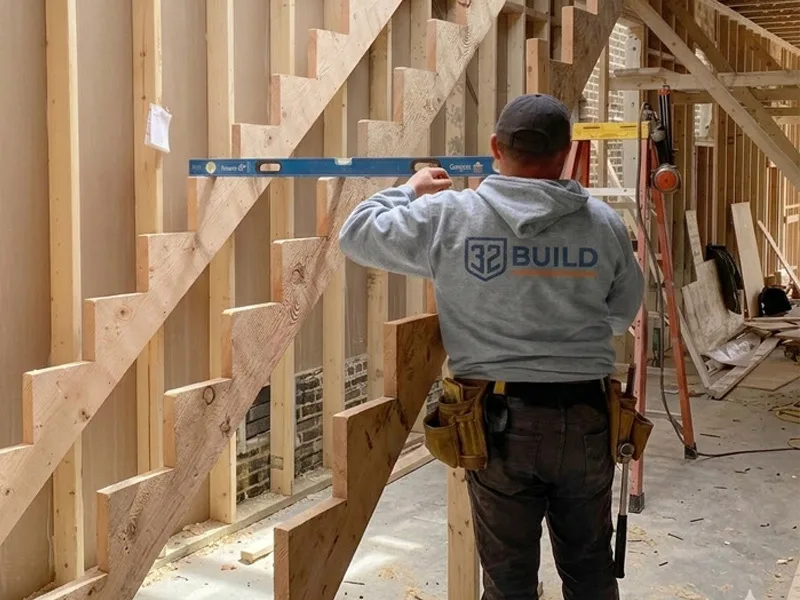
- No blocking in the walls when drywall goes up, so heavy pieces cannot be anchored properly
Matching existing woodwork
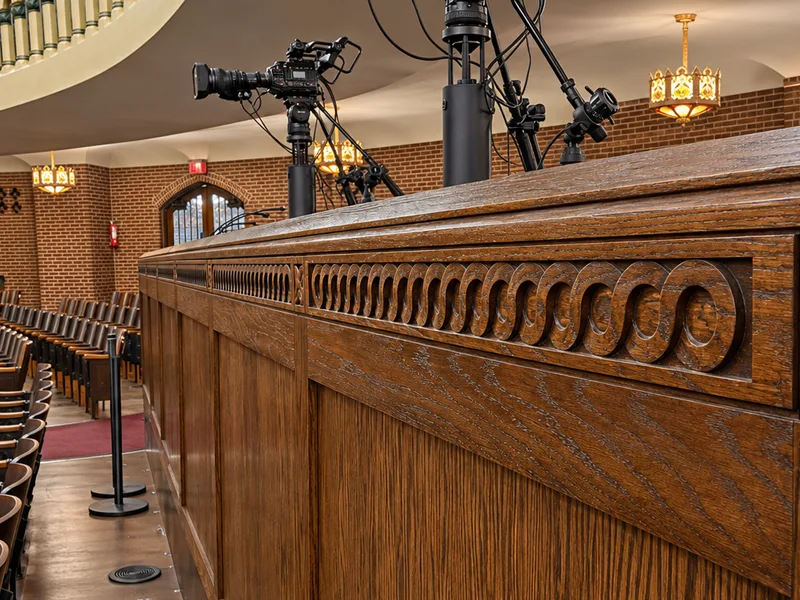
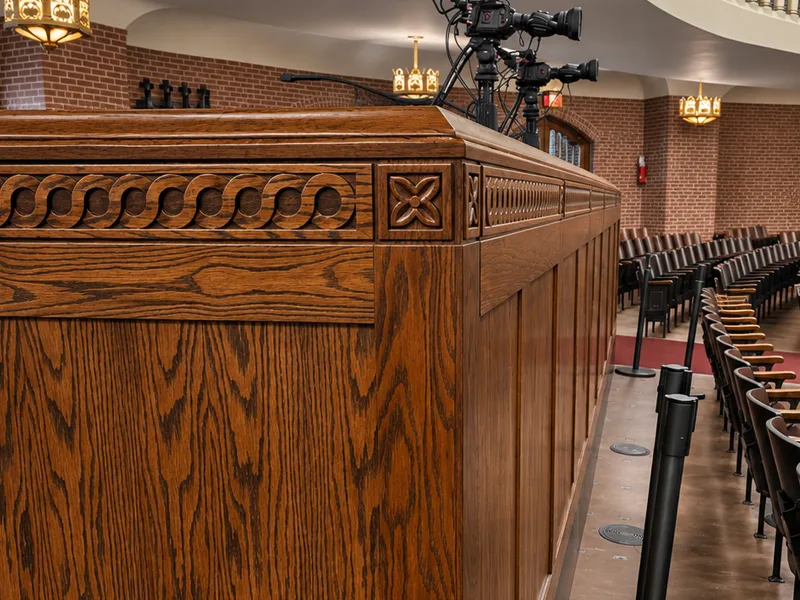
The hardest millwork is new work that has to match old. On our Old Town church AV platform, new oak paneling and a carved frieze were built to match the sanctuary's existing woodwork, so the platform reads as part of the original room.
If you are specifying reception desks, built-ins, paneling, or feature walls, see our millwork and finish carpentry work.
About Field Notes
Field Notes is published by 32 Build, a licensed, bonded & insured Chicago general contractor working in residential renovation, gut rehabs, multifamily repositioning, and commercial construction. Every article is written or reviewed by our field team based on actual project experience — not national averages or general advice.
If you have a project in mind after reading, we offer free on-site estimates for all project types across Chicago and the suburbs. Our team responds the same day.