The permit is often the longest wait in a Chicago office buildout. Here is when the faster tracks work for a tenant improvement, when they do not, and how to plan around each.
For many tenants, the permit is the part of a buildout they worry about most. The construction schedule is predictable; the city review feels like a black box. The good news is that Chicago has faster permit tracks, and a lot of office work can use them. The catch is that not every tenant improvement qualifies, and choosing the wrong path can cost more time than it saves.
The permit paths in plain terms
The Chicago Department of Buildings has several ways to get a permit. For an office buildout, three matter most:
- Express Permit Program. An online permit for small, well-defined scopes that do not need architectural drawings. The City notes that many of these permits are issued the same day.
- Self-certification. A licensed architect or engineer enrolled in the City's program certifies that the drawings meet code. The review is much faster than standard plan review, and the design professional takes on more responsibility for compliance.
- Standard plan review. The full review, with comments, revisions, and resubmittals. Larger or more complex projects end up here.
Where a typical TI lands
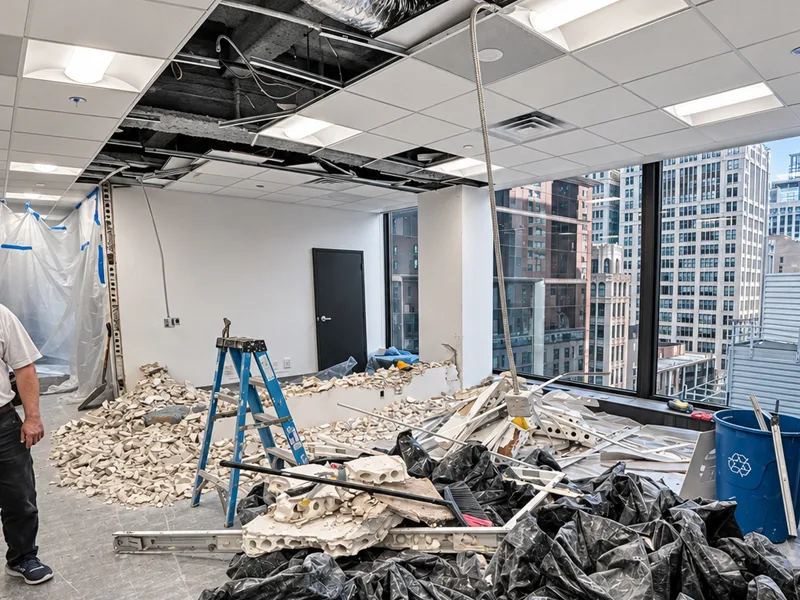
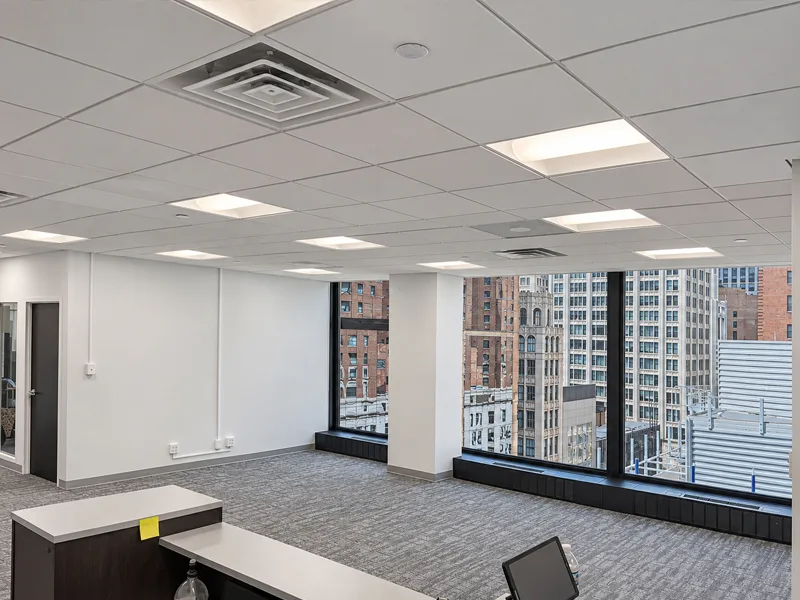
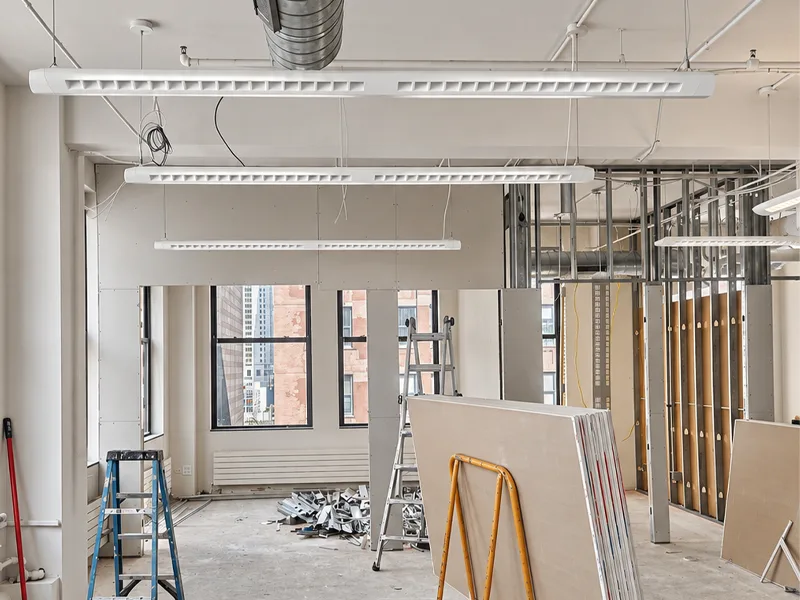
Most office tenant improvements build new walls, move doors, change lighting and power, and adjust HVAC and sprinklers. That kind of work needs drawings, so it usually does not fit the Express Permit Program. It often does fit self-certification, which is where the real time savings are for a TI.
Public permit records in the Loop show this in use. One example is a tenant buildout of about 400 square feet that was self-certified under the 2019 Chicago Building Rehabilitation Code, the code that governs work in existing buildings.
When the fast tracks do not work
- The scope changes the building's use or occupancy, such as office space becoming a clinic, assembly space, or restaurant.
- The work touches structure, egress stairs, or the fire-rated walls around shared corridors.
- The building, the use, or the size of the project falls outside the self-certification program's limits.
- The landlord's own review of drawings has not finished. Building management approval is separate from the City and often takes just as long.
What to do before you sign the lease
Ask your architect early which path the project is likely to take, and build the schedule around that answer, not around the fastest case. Get building management's contractor rules and drawing review process at the same time. If rent starts on a fixed date, a permit path that adds weeks matters as much as the construction itself.
How we plan around it
On a tenant improvement or office buildout, we order long-lead items as soon as drawings are final, so doors, hardware, and glass are not waiting on the permit. Demolition and protection can sometimes start under a separate permit while the main review runs. The goal is simple: by the time the permit is issued, everything else is ready to go.
Permit rules change. Treat this as a guide to the questions to ask, and confirm the current requirements for your project with your architect and the Department of Buildings before you commit to dates.
About Field Notes
Field Notes is published by 32 Build, a licensed, bonded & insured Chicago general contractor working in residential renovation, gut rehabs, multifamily repositioning, and commercial construction. Every article is written or reviewed by our field team based on actual project experience — not national averages or general advice.
If you have a project in mind after reading, we offer free on-site estimates for all project types across Chicago and the suburbs. Our team responds the same day.